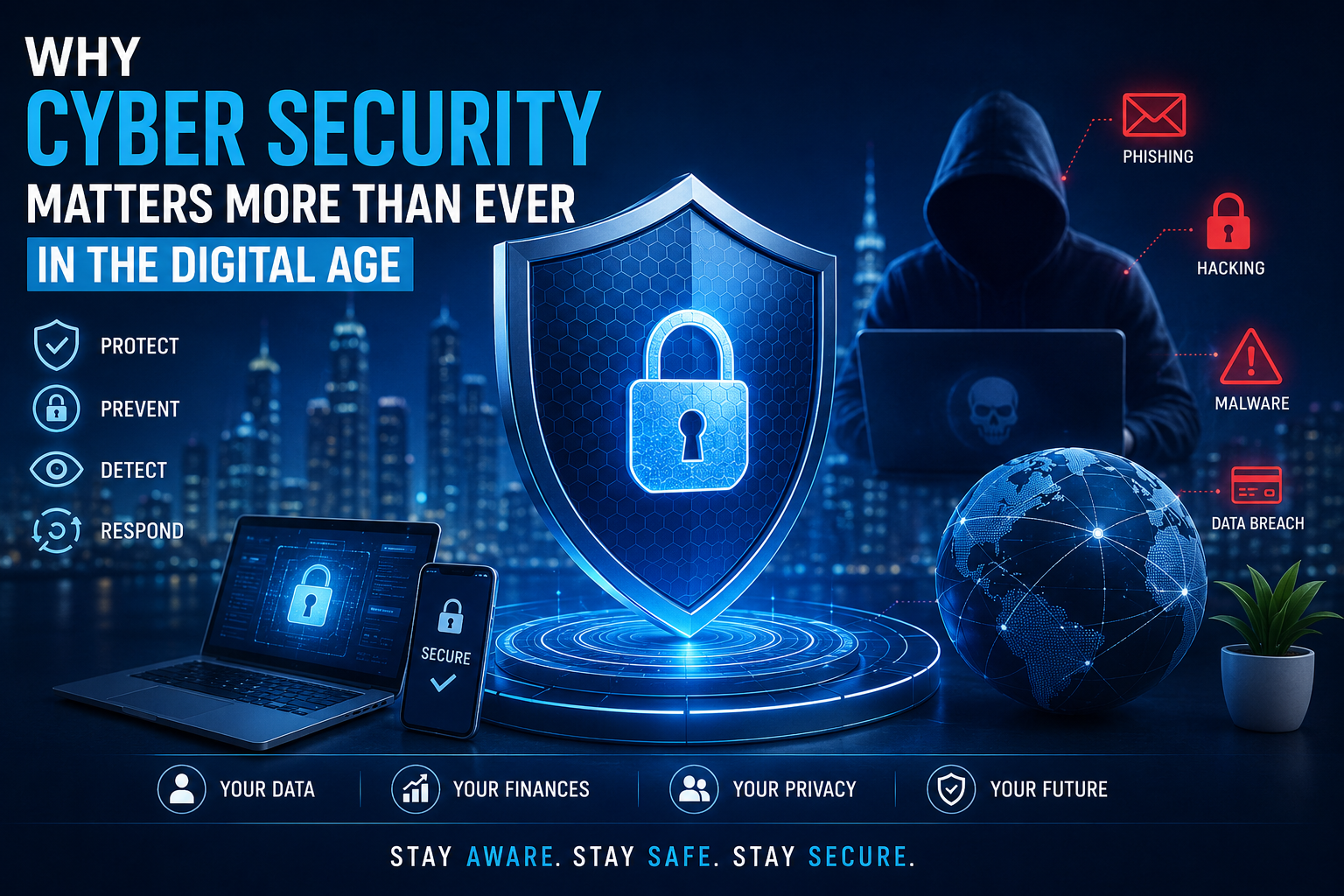
The digital age has transformed the way we live, work, communicate, and conduct business. From online banking and cloud storage to social media, smart homes, and artificial intelligence, technology has become an inseparable part of everyday life. While these innovations have created unprecedented convenience and opportunities, they have also introduced new risks. Every click, login, download, and online transaction generates valuable digital information that cybercriminals seek to exploit.
Cyber security is no longer a concern limited to governments, multinational corporations, or IT professionals. It has become a fundamental necessity for everyone who uses the internet. Whether you are a student attending online classes, a business owner managing customer data, a professional working remotely, or simply someone scrolling through social media, your digital identity deserves protection.
As cyber threats continue to evolve in complexity and scale, understanding cyber security has never been more important. In today’s connected world, protecting your digital life means protecting your privacy, finances, reputation, and even your future.
Understanding Cyber Security
Cyber security refers to the practice of protecting computer systems, networks, devices, and digital information from unauthorized access, cyberattacks, theft, or damage. It combines technology, policies, and user awareness to defend against a constantly changing landscape of digital threats.
Modern cyber security encompasses several key areas, including:
-
- Network Security
-
- Information Security
-
- Cloud Security
-
- Application Security
-
- Mobile Device Security
-
- Identity and Access Management
-
- Data Privacy Protection
Rather than relying on a single tool, effective cyber security is built on multiple layers of protection that work together to minimize risk.
The Rising Threat Landscape
Cybercrime has grown into one of the world’s fastest-growing criminal industries. Attackers are no longer just isolated hackers working independently; many cybercriminal groups operate as organized networks with advanced tools, financial resources, and sophisticated techniques.
Some of the most common cyber threats include:
Phishing Attacks
Phishing remains one of the most successful cyberattack methods. Attackers send fake emails, messages, or websites that appear legitimate to trick users into revealing passwords, banking credentials, or personal information.
Malware
Malware includes viruses, worms, spyware, ransomware, and trojans designed to steal information, damage systems, or gain unauthorized access.
Ransomware
Ransomware encrypts important files and demands payment to restore access. Individuals, hospitals, educational institutions, and businesses worldwide have suffered significant financial losses due to ransomware attacks.
Identity Theft
Cybercriminals steal personal information such as national identification numbers, passwords, banking details, or social media accounts to commit fraud or impersonate victims.
Data Breaches
Organizations storing customer information are frequent targets. A single breach can expose millions of records, leading to financial loss, legal consequences, and damaged public trust.
AI-Powered Cybercrime
Artificial intelligence has introduced remarkable innovations, but it has also enhanced cybercrime. Criminals now use AI to automate phishing campaigns, generate convincing fake messages, and create realistic deepfake videos or voice recordings that make scams increasingly difficult to detect.
Why Cyber Security Matters Today
Protecting Personal Privacy
Personal data has become one of the most valuable digital assets. Every online account stores information about your identity, habits, finances, and communication. Strong cyber security helps ensure this sensitive information remains private.
Securing Financial Transactions
Digital payments, online shopping, and internet banking have become routine. Without proper security measures, cybercriminals can steal banking credentials, payment card information, or cryptocurrency holdings.
Protecting Businesses
Businesses rely heavily on digital infrastructure. A successful cyberattack can disrupt operations, compromise customer information, damage brand reputation, and result in substantial financial losses. Investing in cyber security is now a business necessity rather than an optional expense.
National Security
Governments worldwide face cyber threats targeting critical infrastructure, healthcare systems, transportation, communication networks, and energy facilities. Protecting these systems is essential for maintaining national stability and public safety.
Supporting Digital Innovation
Emerging technologies such as cloud computing, artificial intelligence, blockchain, and the Internet of Things (IoT) continue to reshape industries. Strong cyber security enables organizations to embrace innovation while minimizing associated risks.
Everyday Habits That Improve Cyber Security
Technology alone cannot guarantee safety. Human awareness remains one of the strongest defenses against cyber threats.
Here are practical habits everyone should adopt:
-
- Create strong, unique passwords for every account.
-
- Enable Multi-Factor Authentication (MFA) whenever available.
-
- Keep operating systems and applications updated.
-
- Verify emails and website links before clicking.
-
- Download software only from trusted sources.
-
- Avoid using unsecured public Wi-Fi for sensitive activities.
-
- Regularly back up important files.
-
- Limit the personal information shared on social media.
-
- Review account security settings periodically.
-
- Stay informed about emerging cyber threats.
These simple practices significantly reduce the likelihood of becoming a victim of cybercrime.
The Human Factor
Interestingly, many successful cyberattacks do not exploit technology—they exploit people.
Cybercriminals often rely on curiosity, fear, urgency, or trust to manipulate victims into making mistakes. A convincing email claiming that your account has been suspended or a fake message requesting an urgent payment can bypass even sophisticated technical defenses if users fail to recognize the warning signs.
This is why cyber security awareness is just as important as antivirus software or firewalls. Educated users become the first line of defense against digital threats.
The Role of Artificial Intelligence
Artificial intelligence is transforming cyber security in remarkable ways.
Security professionals increasingly use AI to monitor network activity, identify unusual behavior, detect malware, and respond to threats in real time. Machine learning systems can analyze enormous volumes of data far faster than human analysts, allowing organizations to detect attacks earlier and reduce response times.
However, AI is also becoming a powerful tool for cybercriminals. Automated attacks, intelligent phishing campaigns, and deepfake technologies demonstrate that both defenders and attackers now leverage AI. This evolving landscape makes continuous learning and adaptation essential.
The Future of Cyber Security
As technology advances, cyber security will become even more important. Several trends are expected to shape the future:
-
- Increased adoption of Zero Trust security models.
-
- Greater use of AI-driven threat detection.
-
- Stronger privacy regulations worldwide.
-
- More secure cloud computing environments.
-
- Expansion of biometric authentication methods.
-
- Enhanced protection for Internet of Things (IoT) devices.
-
- Quantum computing research influencing future encryption standards.
Organizations and individuals alike must embrace continuous improvement rather than assuming security is ever “complete.
Building a Safer Digital Future
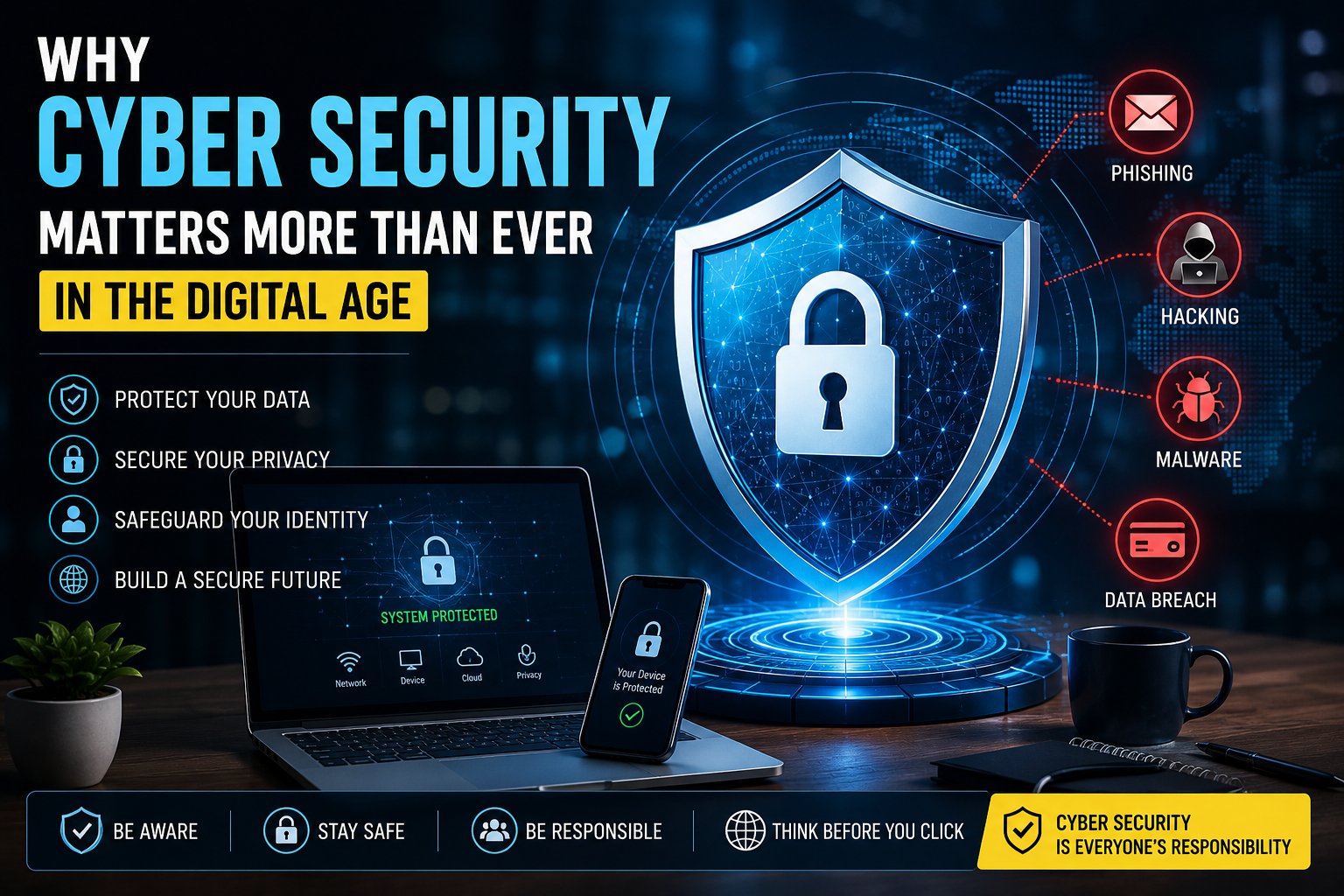
Cyber security is a shared responsibility. Governments establish regulations, technology companies develop secure platforms, organizations invest in protective measures, and individuals practice responsible online behavior.
Creating a safer digital environment requires collaboration, education, innovation, and a commitment to ethical technology use. Every secure password created, every suspicious email reported, and every software update installed contributes to a more resilient digital ecosystem.
Conclusion
The digital age offers incredible opportunities, but it also demands greater responsibility. As our dependence on technology continues to grow, cyber security becomes an essential life skill rather than a specialized technical subject.
Protecting digital information is not only about preventing financial loss or avoiding hackers—it is about safeguarding our identities, preserving privacy, maintaining trust, and ensuring that technology continues to improve lives without compromising security.
Cyber threats will continue to evolve, but so will the technologies and strategies designed to combat them. By staying informed, adopting safe online habits, and recognizing that cyber security is everyone’s responsibility, individuals and organizations can confidently navigate the digital world and embrace its opportunities with resilience and confidence.